
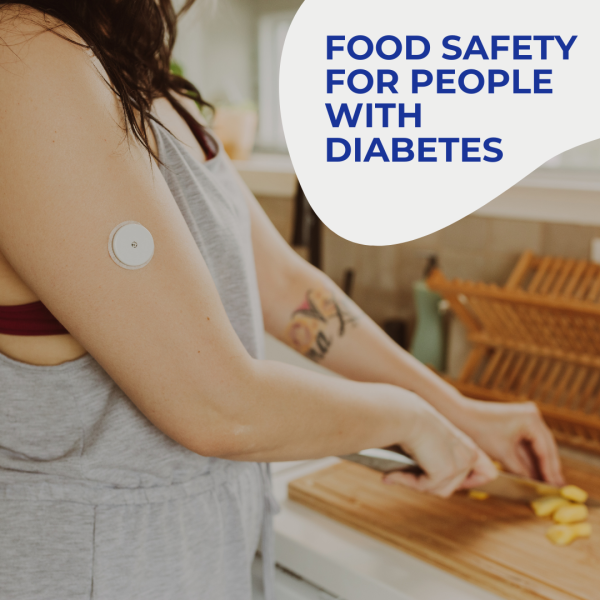
Diabetes strikes people of all ages. Approximately 11% of the U.S. population has the disease. Food safety, while important for everyone, is of particular concern for those with diabetes, as well as immuno-compromised individuals.
Diabetes can affect various organs and systems of the body, causing them to function improperly. For example, the immune system may not readily recognize harmful bacteria or other types of pathogens. Impairments to stomach and kidney functions can mean that the body holds onto these pathogens longer and allows them to grow. All of this means increased susceptibility to infection.
To avoid contracting foodborne illness, those with diabetes, as well as their caregivers, must be especially vigilant when handling, preparing, and consuming food. Here are some basic steps to follow:
Clean: Wash hands and food preparation surfaces often.
Separate: Keep raw meat, poultry, seafood, and eggs away from other foods in the shopping cart, grocery bags, refrigerator and on preparation surfaces.
Cook: Use a food thermometer to ensure that all foods are cooked or reheated to the proper temperature.
Chill: Refrigerate or freeze meat, poultry, eggs, seafood, and other perishables within two hours of cooking or purchasing – within one hour if the temperature outside is above 90°F.
More information on food safety for vulnerable populations is available from the FDA. In addition to food preparation, it can be important to work in a clean kitchen. Visit the Levels of Cleaning for Better Health guide for specific cleaning routines.
TELL US WHAT YOU THINK (0)